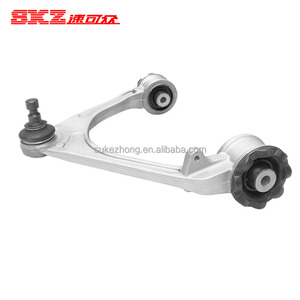
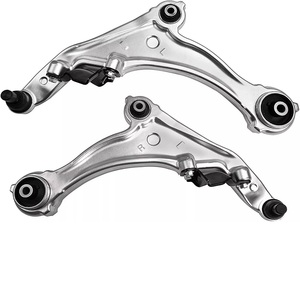
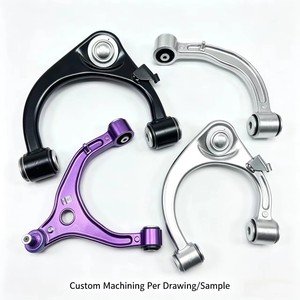
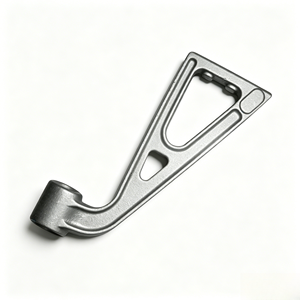
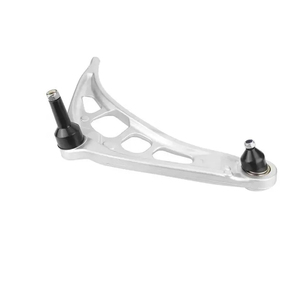
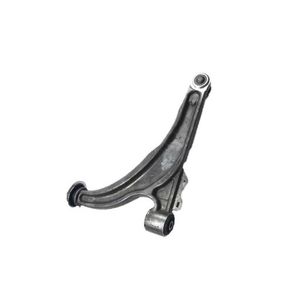
Custom OEM Lower Control Arm Manufacturers & Factory

IATF 16949-Certified Suspension Engineering: Precision Forged Aluminum, CNC Machining, and High-Tonnage Stamping Solutions for Global Tier-1 Aftermarket & Racing Applications.

Factory Catalog Showcase

Precision-Engineered OEM Lower Control Arms

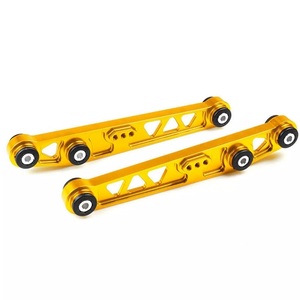
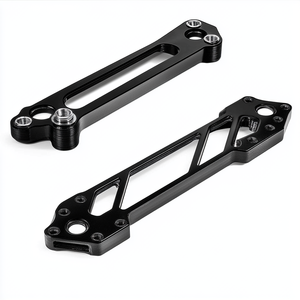
Browse our precision manufacturing programs covering forged alloy, wire EDM stainless steel, high-performance racing arms, and OEM-matched direct replacements.
9,485+
Chassis Tooling Catalog
31+
OEM Vehicle Makes Covered
100%
In-House Rubber-to-Metal Bonding
±0.005mm
Ultra-Precision CNC Tolerance
Engineering Authority

Structural Metallurgy & Dynamic Fatigue Resistance

A control arm is the safety-critical nexus of lateral steering stability, wheel alignment integrity, and dynamic vibration isolation. Here is how our Tier-1 standard facility ensures zero structural failure.

6061-T6 & 7075 Forged Alloys

Utilizing high-tonnage warm and cold forging presses ensures a continuous, unbroken metal grain flow aligned with load-bearing axes. We deliver up to 40% weight reduction compared to stamped iron while elevating yield strength beyond 310 MPa for unsprung mass reduction.

Proprietary Rubber Formulation

Molded directly in-house, our proprietary elastomeric bushings feature specialized Shore A durometer balancing (55–75 Shore A), engineered specifically for torsional flex endurance, road noise absorption, and resistance to hydrocarbon degradation.

Multi-Axis CNC Precision Finishing

Our temperature-controlled multi-axis CNC machine lines maintain critical ball joint press-fit bores and pivot pin centers within strict micrometer tolerances (±0.005mm), eliminating uneven tire wear and steering pull under heavy braking.

Strategic Procurement Analysis

Future Sourcing & Industry Evolution Trends (2025–2030)

How the seismic shift toward electric vehicle (EV) platforms and autonomous drive systems is reshaping commercial control arm supply chains.

1. The High-Torsional EV Weight Paradox

Battery packs drastically escalate vehicle curb weights by 25% to 35%, generating instant torque spikes at wheel assemblies. Procurement teams are pivoting away from sheet steel stampings toward structural hollow-cast or multi-link forged aluminum control arms to endure severe cyclic load requirements without compromising efficiency.

2. Fully Integrated Sub-Assembly Supply Contracts

Global aftermarket distributors and regional OEMs increasingly favor Tier-1 factories that supply pre-assembled lower control arms—integrated with pressed-in sealed ball joints, pre-torqued brackets, and hydraulic dampers. This shifts assembly risk to the manufacturer and reduces logistics overhead by up to 22%.

3. Hydro-Bushings & Dual-Durometer Damping

Internal combustion engine noise masked micro-vibrations; EV cabin silent operation demands next-generation fluid-filled hydraulic bushings (hydro-bushes). Manufacturers capable of custom-bonding fluid chambers into the arm casting hold a definitive market edge.

4. Digital Traceability & Closed-Loop Scrap Recycling

Stringent ESG criteria mandate end-to-end metallurgical verification. Modern Tier-1 partners must provide 3.1 Material Test Reports (MTR), laser-etched 2D Data Matrix codes for lot tracing, and closed-loop swarf recycling during multi-axis billet milling.

Factory Operations Workflow

Rigorous In-House Manufacturing Protocol

We eliminate quality variance by housing tool design, metallurgy processing, rubber formulation, and final dynamic testing under a single roof.

Stage 01

Tooling & Mold CAD/CAM

CAD kinematic simulation and FEA stress testing dictate mold engineering for high-pressure casting dies, progressive stamping tools, and precision vulcanizing molds.

Stage 02

Forming & Heat Treatment

Forging and casting processes are followed by computer-regulated T6 solution heat treatment and artificial aging to maximize ultimate tensile strength.

Stage 03

Rubber-to-Metal Bonding

Automated grit blasting, silane phosphating, and Chemlok bonding primers guarantee that vulcanized natural rubber sleeves never delaminate under shear loads.

Stage 04

CMM & Fatigue Validation

Hexagon coordinate measuring machines verify GD&T dimensions; hydraulic test rigs subject random lot samples to 1,000,000 cyclic load reversals without cracking.

Procurement Knowledge Base

Frequently Asked Questions for B2B Importers & Engineers

Technical clarity regarding tooling investments, compound standards, quality documentation, and logistics lead times.

What specific structural materials and alloys are available for custom OEM production?
We manufacture lower control arms across four primary structural materials depending on application load, vehicle curb weight, and cost targets: (1) Forged 6061-T6 and 7075-T6 Aerospace Aluminum for premium motorsport and lightweight EV applications; (2) Cast A356-T6 Aluminum for volume passenger car applications balance cost and unsprung mass; (3) Heavy-Gauge Stamped High-Strength Low-Alloy (HSLA) Steel (e.g., Q345B/SPHC) for heavy utility pickups and commercial trucks; and (4) Cast Ductile Iron (QT450-10) for severe duty commercial vehicle fitments.
How does your factory ensure rubber-to-metal bonding integrity during high-torsion cornering?
Bond failure is prevented through an automated 5-step substrate preparation system: metal sleeves undergo robotic solvent degreasing, aluminum oxide grit-blasting (Ra 3.2µm), precision phosphate chemical conversion coating, automated double-dip application of Lord Chemlok adhesive primers, followed by high-pressure transfer molding. Every vulcanization batch is tested according to ASTM D429 Method B (90-degree peel test), guaranteeing 100% rubber failure rather than bond failure.
Can you manufacture lower control arms directly from physical OE samples or step/iges files?
Yes. Our engineering department operates industrial blue-light optical 3D scanners (accuracy down to 0.015mm) capable of reverse-engineering OEM sample arms. We generate full 3D CAD models (STEP, IGES, Parasolid), conduct FEA (Finite Element Analysis) deflection tests under cornering load models, produce prototype tooling within 20–25 days, and provide complete First Article Inspection (FAI) reports with cross-checked OE fitment data.
What is your standard Minimum Order Quantity (MOQ) and production lead time for custom production?
For existing tooling in our extensive catalog of 9,485+ verified part numbers, standard production batch MOQs start at 50 to 100 units per line item. For full custom tooling (OEM/ODM new product development), the minimum mold run typically ranges between 300 to 500 units. Tooling fabrication spans 25 to 35 days, while initial production runs require approximately 30 to 40 days following sample sign-off.
What fatigue testing and metallurgical inspection reports accompany each shipment?
Every export container includes comprehensive Quality Assurance dossiers: EN 10204 Type 3.1 chemical composition and tensile strength certificates, Spectrographic material breakdown, micro-hardness profiles, 720-hour neutral salt spray (ASTM B117) corrosion reports, CMM full-dimensional verification, and multi-axis dynamic fatigue bench test validation reports certifying endurance beyond 500,000–1,000,000 load cycles.
Are your lower control arms supplied as bare castings or complete ready-to-mount assemblies?
We offer flexible assembly configurations tailored to your channel: bare machined control arm castings, pre-bushed arms (with factory-pressed elastomeric or polyurethane bushings), or complete turnkey assemblies that include pre-installed sealed ball joints with CR/Neoprene dust boots, circlips, castle nuts, and installation hardware ready for immediate line assembly or direct workshop sale.
Which vehicle platforms and marques does your existing tooling cover?
Our factory owns direct tooling for 31 global automotive marques spanning over 60 chassis component categories. Core coverage includes Asian platforms (Toyota, Nissan, Honda, Mitsubishi, Isuzu, Mazda, Hyundai), American truck and passenger lines (Ford, GM/Chevrolet, Chrysler/Jeep), and European vehicles (BMW E46/E85/E90, Porsche 911/Cayman/Boxster, Audi/Volkswagen Group, Jaguar).
How do you prevent corrosion and galvanic reaction between aluminum arms and steel subframes?
Corrosion protection is calibrated to base metallurgy: Aluminum arms receive Type II anodizing (available in high-gloss motorsport colors or stealth OEM black) or high-density electrophoretic e-coating. Stamped and cast iron components undergo zinc-nickel alloy electroplating or cataphoresis paint exceeding 1,000 hours of cyclic salt spray exposure. Bushing sleeves are plated with Dacromet or Geomet to eliminate galvanic oxidation against the vehicle subframe.

Ready to Engineer or Procure Custom Lower Control Arms?

Whether you need volume manufacturing for global distribution, bespoke suspension arms for motorsport, or rapid reverse engineering from an OE part number—our technical sales engineers are ready to review your specifications.

Send an Inquiry