CNC Forged
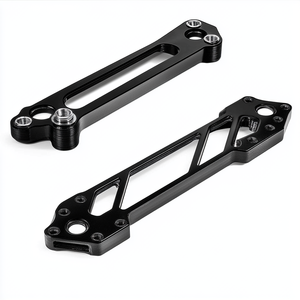

Precision-manufactured upper and lower suspension linkages, elastomer bushings, and vibration-isolating mounts designed to meet demanding original equipment fatigue benchmarks.
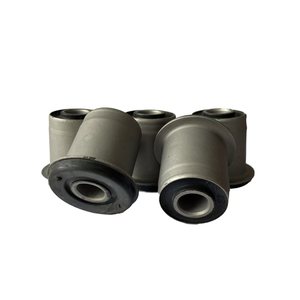
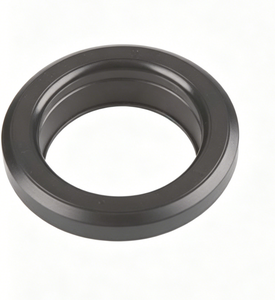
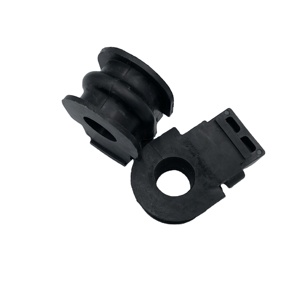
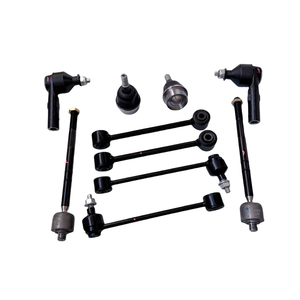
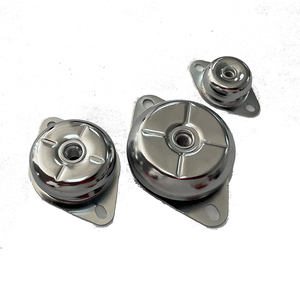
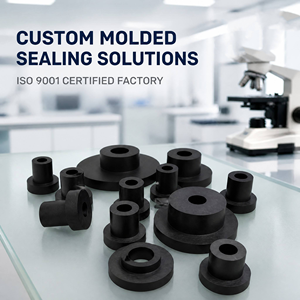
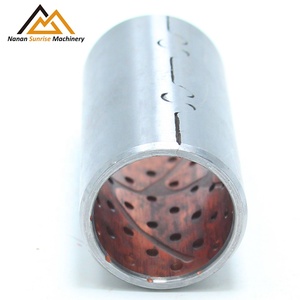
Evaluating structural kinematics, metallurgy trade-offs, and viscoelastic rubber-to-metal chemical adhesion for heavy load cycles and dynamic chassis stability.
In double-wishbone and multi-link independent suspension systems, the Upper Control Arm (UCA) is the critical structural member responsible for guiding wheel camber, caster geometry, and resolving lateral cornering loads into the unibody subframe. Unlike lower control arms, which directly absorb spring and damper reaction forces in conventional MacPherson and strut configurations, upper control arms work primarily in tension, compression, and shear. They maintain tire contact patch uniformity across high dynamic loads, braking dive, and lateral roll angles.
For procurement engineers and aftermarket category directors, selecting a reliable OEM/ODM upper control arm factory requires deep technical evaluation that extends far beyond external stamping aesthetics. The structural integrity of an upper control arm assembly relies entirely on three interdependent engineering pillars: the structural arm body (stamped steel, cold-forged 6061-T6 aluminum, or nodular cast iron), the precision-ground ball joint assembly, and the integrated rubber-to-metal vulcanized bushings. Any single failure along these stress paths leads directly to directional wandering, accelerated tire wear, NVH degradation, or catastrophic joint pull-out.
Whether utilizing high-strength low-alloy (HSLA) dual-sheet robotic stamped weldments or lightweight 6082-T6 forged aluminum bodies, structural integrity demands non-destructive magnetic particle inspection (MPI) and 3D coordinate measuring machine (CMM) dimensional verification to eliminate residual cold-forming stress pockets.
The operational lifespan of an upper control arm depends on rubber formulation. Natural rubber (NR) and tailored EPDM matrices must be combined with multi-stage phosphate pretreatment and heat-activated Chemlok bonding adhesives to withstand severe high-frequency angular displacement without tearing.
Ball studs forged from 40Cr or 42CrMo undergo induction hardening to achieve HRC 58-62 surface hardness, seated in carbon-fiber reinforced polyoxymethylene (POM) bearing seats packed with low-temperature synthetic polyurea grease to prevent stick-slip stiction.
Selecting the appropriate structural substrate across commercial utility vehicles, lifted off-road trucks, luxury platforms, and electric vehicles.
| Material / Fabrication Mode | Tensile Strength (MPa) | Weight Optimization | NVH Damping Capacity | Target Vehicle Segment | Tooling Amortization |
|---|---|---|---|---|---|
| Stamped HSLA Steel (Welded Shell) | 540 – 780 MPa | Standard Baseline | Excellent (Elastomer Paired) | High-Volume Sedans, Light Pickups | Low per Unit |
| Hot-Forged 6082-T6 Aluminum | 310 – 380 MPa | 35-45% Reduction | Moderate (Needs Voided Bushing) | Premium Crossover, New Energy EVs | Medium-High |
| Cast Ductile Iron (QT500-7 / FCD500) | 500 – 620 MPa | Heavy Section | High Mass Inertia | Heavy Commercial, Heavy Duty 4x4 | Economical |
| CNC Billet 6061-T6 (Off-Road/Racing) | 290 – 340 MPa | Optimized Strength-to-Weight | Stiff (Uniball / Polyurethane) | Lifted Overland, Performance Tuner | Zero Tooling (Low MOQ) |
Strategic supply chain transitions reshaped by electrification, supply chain de-risking, and integrated smart chassis modularity.
The global market for automotive chassis control arms is undergoing an unprecedented restructuring. As original equipment manufacturers (OEMs) and aftermarket distributors rethink single-source vulnerability, procurement directors are rapidly restructuring their sourcing footprints. Several dominant procurement dynamics will govern the next decade:
Electric vehicle battery packs increase curb weight by 20% to 35%, generating instant low-end torque. Upper control arms for EVs require reinforced structural webbing, enlarged ball-stud diameters, and specialized rubber compounds designed to counter high cyclic torsional loading without cracking.
Global procurement teams are shifting strategic volume toward established industrial ecosystems in Thailand and ASEAN. Thailand offers comprehensive raw rubber supply chains, modern robotic manufacturing clusters, and preferential tariff structures that safeguard buyers against regional trade disruption.
Importers and repair workshops are transitioning away from bare arm stampings. The market now strongly favors fully populated, pre-pressed assemblies complete with OEM-grade bushings, dust covers, and ball joints to eliminate assembly errors and slash installation labor hours.
Tier-1 automotive supply frameworks now require transparent carbon reporting across vulcanization plants, solvent-free e-coating processes, REACH and RoHS compliant rubber compounds, and zero-discharge phosphate pre-treatment facilities.
How advanced elastomer modeling, hydro-bushing dampening, and multi-axis CNC surface machining elevate suspension durability and NVH isolation.
The modern automotive chassis operates in an acoustic environment where internal combustion engine hum is replaced by the near-silent electric powertrain. Consequently, road harshness, suspension booming, and high-frequency vibrations transferred through the upper wishbone are directly perceptible inside the vehicle cabin. This acoustic shift is driving significant technological advancements in control arm manufacturing:
Traditional solid elastomer bushings are giving way to integrated hydro-bushings featuring internal fluid chambers and tuned flow orifices. In dual-wishbone configurations, these allow low dynamic stiffness under high-frequency chatter while maintaining stiff radial control under hard braking, preventing cabin boom.
To withstand extreme operating temperature ranges (-40°C to +120°C) without hardening or embrittlement, rubber formulation experts are synthesizing specialized blends of polybutadiene, modified NR, and EPDM. These provide superior ozone resistance, minimal compression set, and extended fatigue life.
Modern rust prevention requires total surface immersion e-coating that exceeds 1,000 hours of continuous ASTM B117 salt spray exposure. This ensures the internal weld pockets, ball-joint sockets, and steel inner bushing sleeves remain corrosion-free in snow-belt markets using harsh de-icing chemicals.
Combining natural rubber sourcing in Thailand with end-to-end tooling, molding, vulcanization, and robotic assembly under one roof.
Headquartered in Thailand—the epicenter of global natural rubber harvesting and automotive manufacturing—NISTO RUBBER MANUFACTURING CO., LTD. has engineered a vertically integrated manufacturing infrastructure that bridges the gap between OEM build standards and high-mix aftermarket demand. Unlike regional trading agencies that outsource vulcanization or assembly to secondary workshops, NISTO maintains 100% direct internal quality control over every stage of component fabrication:
Our expansive production catalog covers 31 global automotive marques across Japanese, American, and European applications. From Toyota, Isuzu, Honda, Nissan, and Ford to Jeep and Hyundai, every line item is fully cross-referenced to original equipment (OE) numbers with high-resolution fitment photography.
Because we formulate and mix our proprietary rubber compounds in-house, we control Shore-A durometer hardness, tensile elongation, and resilience down to strict single-digit batch variations. Our integrated rubber-to-metal chemical bonding lines eliminate outer sleeve slippage under severe torsional loads.
Every batch undergoes rheometer testing, tensile pull-out verification, metallurgical hardness cross-sectioning, and salt spray resistance monitoring. With ready inventory stored across modern warehouse aisles, we offer flexible low-MOQ consolidations and rapid order dispatches for international distributors.
Direct technical answers addressing OEM/ODM minimum order quantities, metallurgical certifications, mold customization, and quality testing.
For custom OEM/ODM projects requiring new stamping dies, forging tooling, or dedicated vulcanization molds, standard tooling development averages 35 to 45 business days, including CMM coordinate verification and initial sample approval (PPAP Level 3). Minimum Order Quantities (MOQs) for custom fabrications typically start from 200–500 pieces per SKU depending on whether the arm body is stamped steel or forged aluminum.
We use a strict 4-step surface preparation sequence: shot-blasting to remove scale, zinc-phosphate chemical micro-etching, automated dual-coat primer and heat-cured Chemlok adhesive application, and temperature-controlled transfer molding. Bond adhesion is verified via static push-out and dynamic radial tear tests where structural failure must occur within the rubber matrix itself rather than at the metal-adhesive interface.
Every batch shipment can be accompanied by an inspection dossier containing raw steel/aluminum chemical composition certificates, rubber rheological cure curves, Shore-A durometer readings, ball joint rotational and oscillating torque inspection records, and salt spray corrosion test reports verifying compliance with international quality thresholds.
Yes. For lifted truck platforms, overland builds, and heavy-duty utility vehicles, we engineer extended-travel ball joints featuring hardened 42CrMo studs, expanded articulation angles up to 32 degrees (preventing binding during high droop travel), and serviceable grease zerk fittings equipped with reinforced chloroprene dust boots.
Thailand is a premier global hub for automotive tier-1 manufacturing, offering access to high-grade natural rubber, a skilled automotive engineering workforce, and robust transport links. Sourcing directly from NISTO in Thailand shields buyers from supply chain shocks, avoids punitive tariff classifications, and provides dependable, year-round production continuity.
Whether you require custom-engineered upper control arms, replacement bushings, engine mounts, or a container consolidation of fast-moving chassis components, our engineering team in Thailand is ready to support your technical specifications and production targets.